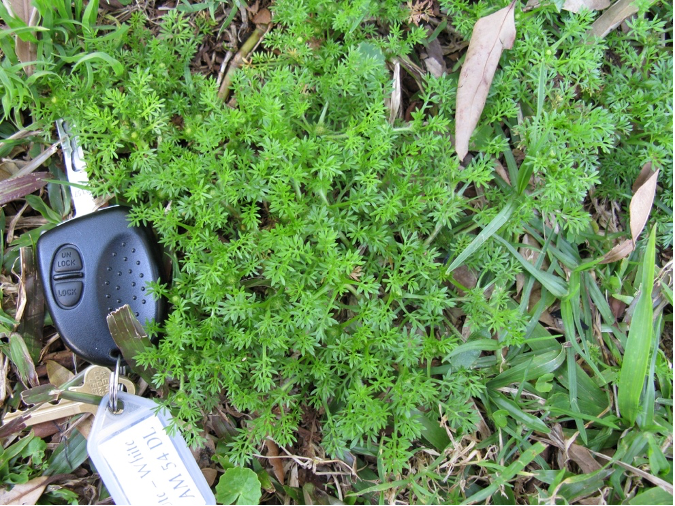
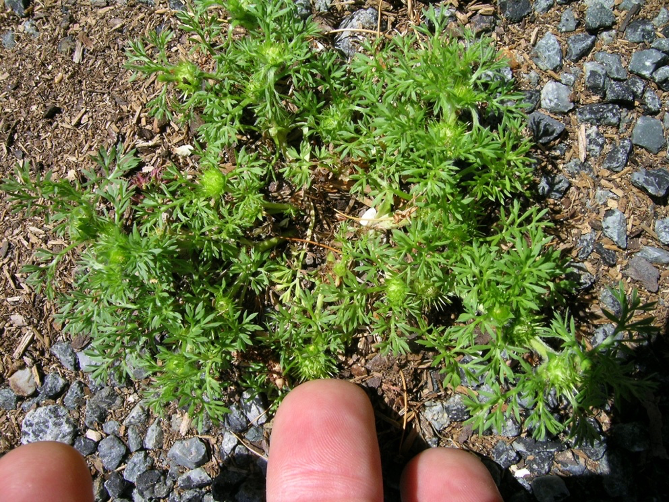
Lawn burweed
Identification
Lawn burweed (Soliva sessilis), is also known as spurweed, bindi weed, field burweed and Spurweed. It is a very low-growing winter annual broadleaf weed that closely resembles parsley-piert and knawel. It is freely branching with oppositely arranged leaves that are highly divided into little leaf segments. Flowers are small (1⁄4 inch or less), broad, and inconspicuous. It can reach an overall diameter of 6 inches and a height of 2 inches. The seeds have sharp spines and because of its low growth habit is very difficult to mow.
Control
The best method for control of weeds in the lawn is to maintain a healthy lawn and prevent them from establishing in the first place. Make sure to get a soil test for your lawn every 2-3 years and follow the fertilizer and lime recommendations. It is also important to mow at the proper height and frequency for the specific turfgrass in your lawn. For more information on how to maintain or start a lawn check out Carolina lawns.
However, if lawn burweed is an issue in your lawn there are more active options of control. You can manually remove the weeds by pulling up the plant including the root, this needs to be done before seeding. Another option is to manage with herbicides that target broadleaf plants. Lawn burweed is a winter annual, so it will begin to die in late spring as air temperatures reach 90 °F and new seeds will germinate as temperatures begin to drop into the 50’s. Post emergence herbicide is best used in winter months before the plants have set seed (December-March) and pre emergence herbicides is best used before the seeds start to germinate and get established (September-November) This article by Clemson has great charts for post and pre-emergent herbicides Clemson lawn burweed pesticide charts.